Carbon Management
Carbon Management

What does Carbon Management mean?
Austria aims to achieve climate neutrality by 2040. Since not all greenhouse gas emissions can be completely avoided (“hard to abate”), additional technologies are needed to capture and permanently store CO₂. These include technologies that capture and permanently store fossil and process-related CO₂ at industrial facilities, thereby reducing emissions (CCUS). In addition, there are negative emission technologies (NETs) that remove CO₂ from the atmosphere and store it permanently.
Basic knowledge
-

Carbon Removal Certification Framework (CRCF)
The EU established a voluntary Union framework for the certification of permanent CO₂ removals, carbon-storing land management (Carbon Farming), and CO₂ storage in products. -

Carbon Management Strategy (CMS)
The Carbon Management Strategy includes an analysis of the existing framework conditions, necessary reforms, and an action plan for climate policy addressing hard-to-abate or unavoidable residual emissions in Austria. -

Feasibility study on a CO₂ collection and transport network in Austria
AIT, AGGM,, the Montan University of Leoben, and Frontier Economics were commissioned to geographically and quantitatively map CO₂ point sources and sinks in and around Austria, plan transport routes, conduct an economic feasibility analysis, compare international activities, and derive concrete recommendations for action. -
Carbon Capture, Utilisation, and Storage (CCUS) and technological negative emissions
On the path to national climate neutrality, the avoidance of greenhouse gas emissions is clearly prioritized. All sectors must reduce their emissions as much as possible, whether by phasing out the use of fossil fuels, improving energy efficiency, or switching to sustainable renewable energy sources. -
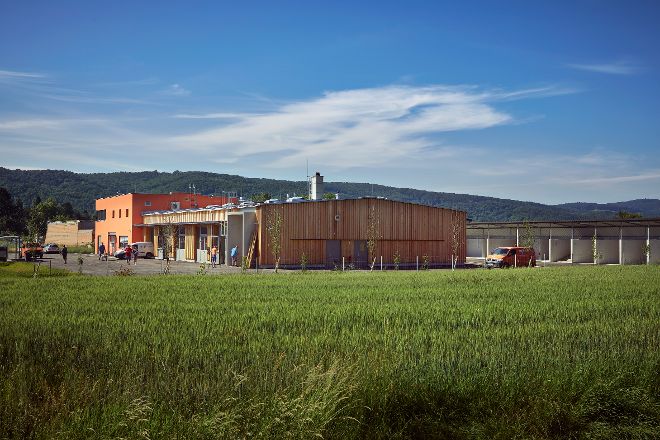
Klimaziele managen: Was Netto-Null und Klimaneutralität für Unternehmen bedeuten
Unternehmen spielen eine wichtige Rolle beim Erreichen der europäischen Klimaziele. Durch ein wirksames Carbon Management reduzieren sie ihre Treibhausgas-Emissionen, fördern die Aufnahme von CO₂ und gleichen verbleibende Emissionen aus – etwa über den Kauf von anerkannten CO₂-Zertifikaten. -

CO₂ Certificates for Voluntary GHG Compensation
Voluntary greenhouse gas compensation is complex: not every CO₂ certificate is equally effective. We explain offsetting mechanisms and show which requirements companies must meet for credible Carbon Management.
Appointment
-
Workshop
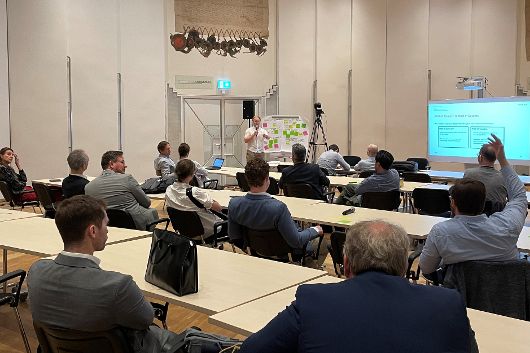
Carbon Capture, Transport, Utilisation, and Storage: Q1 2026
Events Carbon Management
Here we keep you updated on past events on the topic of Carbon Management.
FAQ on Carbon Management
Austria aims to be climate-neutral by 2040. This means, on one hand, reducing and avoiding greenhouse gas emissions as much as possible, and on the other hand, compensating for emissions that cannot be avoided or are difficult to avoid. The overall goal is to achieve a balance (“net zero”) between the greenhouse gases emitted and the CO₂ removed from the atmosphere and stored in carbon sinks. A carbon sink is any system that absorbs more carbon than it releases. The most important natural carbon sinks are soils, forests, and oceans. The most important technical carbon sink is the storage of CO₂ in geological formations.
Climate neutrality is a crucial goal to limit the far-reaching impacts of the climate crisis and to keep global warming to 1.5 degrees Celsius, as established in the 2015 Paris Agreement. The Paris Climate Agreement has been ratified by nearly all countries worldwide.
Austria is pursuing a net-zero climate target. Since not all greenhouse gas emissions can be completely avoided (“hard to abate”), additional technologies are needed to capture and permanently store CO₂. These include technologies that capture and store fossil and process-related CO₂ at industrial facilities, thereby reducing emissions (CCUS). Additionally, there are negative emission technologies (NETs) that permanently store CO₂, effectively removing it from the atmosphere.
Carbon Capture and Storage (CCS) bezeichnet die CO2-Abscheidung, den CO2-Transport und die dauerhafte CO2-Speicherung in unterirdischen Speicherstätten. Als Speicherstätte eignen sich beispielsweise leere Öl- oder Gasfelder oder salinare Aquifere. Die Speicher können entweder unterirdisch an Land (on-shore) oder unter dem Meeresboden (off-shore) sein. CO2 darf nur in Speicherstätten gespeichert werden, wo es sicher, umweltverträglich und permanent bleibt.
Der Prozess verläuft in drei Schritten:
- Abscheidung: Das CO2 wird von den anderen Gasen getrennt, häufig durch eine chemische Lösung, die mit CO2 reagiert. Moderne Technologien können theoretisch das gesamte CO2 im Abgasstrom abscheiden.
- Transport: Das abgeschiedene CO2 kann mittels Pipeline, Lastwagen, Tankwaggons oder Tankschiffen transportiert werden. Für den Transport großer CO2-Mengen macht es aus ökologischer und wirtschaftlicher Sicht Sinn, ein Pipelinenetz aufzubauen.
- Speicherung: Das CO2 wird schließlich in Gesteinsformationen unter der Erdoberfläche injiziert (Speicherstätte). Das CO2 wird in den Poren geologischer Formationen mit undurchlässigen Gesteinsschichten eingeschlossen, die wie Dichtungen wirken und verhindern, dass CO2 zurück in die Atmosphäre entweicht.
In BECCS, plant material is used as a raw material for energy production, and the CO₂ emissions generated during the process are captured and stored industrially. Because plants absorb and store CO₂ from the atmosphere through photosynthesis, their combustion combined with subsequent CO₂ capture and storage (CCS) contributes to reducing the CO₂ concentration in the atmosphere. BECCS can be applied, for example, in biogas plants or wood-fired power plants.
Wird der Atmosphäre CO₂ entzogen und dauerhaft gespeichert, entstehen sogenannte negative Emissionen. Die Verfahren, mit welchen negative Emissionen erzielt werden, nennt man „Negativemissionstechnologien“ (Carbon Dioxide Removal, CDR). Hier wird zwischen biologischen, technologischen und geochemischen Verfahren unterschieden:
- Unter biologischen Verfahren fallen Maßnahmen wie die dauerhafte Aufforstung von Wäldern, die aktive Bodenbewirtschaftung und die Wiederherstellung von Riffen und Seegras in flachen Ozeangebieten. All diese Maßnahmen sorgen für eine bessere Bindung und Speicherung des Kohlenstoffs. Aber auch die Pyrolyse von Biomasse zu Holzkohle gilt als biologisches Verfahren Kohlenstoff aus der Atmosphäre dauerhaft zu speichern.
- Von technologischen Verfahren spricht man, wenn das bei industriellen Prozessen anfallende biogene CO₂ direkt abgeschieden (BECCS) oder mittels Luftfiltrierung aus der Umgebungsluft (Direct Air Capture) eingefangen wird und anschließend dauerhaft unterirdisch gespeichert wird.
- Unter geochemische Verfahren fallen Maßnahmen, die zur Beschleunigung von Verwitterungsprozessen sowie zur Steigerung der Produktivität der Ozeane führen. Bei erstem Verfahren werden große Mengen an fein gemahlenen Gesteinen auf Land-und Meeresoberfläche gestreut. Das Gestein reagiert mit CO₂ aus der Luft oder dem Wasser und wird dadurch gebunden und der Atmosphäre entzogen. Bei zweitem Verfahren wird durch die Einbringung von Eisen das Wachstum von Algen in den Meeren gefördert, welcher wiederum beim Wachsen CO₂ aufnehmen.
The source of the CO₂ that is stored or reused is crucial both for distinguishing between the methods and for understanding their climate impact.
Negative Emission Technologies (NETs) encompass all methods that remove greenhouse gases (primarily CO₂) from the atmosphere and store them. In contrast, Carbon Capture, Transport, and Storage (CCS) refers to capturing CO₂ directly at the source (so-called point source), such as the smokestacks of power plants or industrial facilities, and storing it underground. These emissions originate either from industrial processes, like cement production, or from energy generation. The fuel used can be fossil (oil, gas, coal) or biomass. Depending on the fuel, CCS can either reduce fossil or process-related CO₂ emissions (fossil CCS) or, when using sustainable biomass as fuel, remove CO₂ from the atmosphere and store it (BECCS). The latter counts as a negative emission.
In Carbon Capture and Utilization (CCU), the CO₂ captured at the source is put into at least one additional usage cycle. For example, CO₂ can be permanently stored in concrete, slag, or fly ash through mineralization. For instance, CO₂ can be permanently stored in concrete, slag, or fly ash through the process of mineralization. This includes e-fuels, which release the previously captured CO₂ when burned, and plastics, which at the end of their life cycle may be incinerated, releasing the CO₂ back into the atmosphere.
The most important measures on the path to climate neutrality are the abandonment of fossil energy use and a significant increase in energy efficiency. However, there will always be a portion of hard-to-avoid or unavoidable greenhouse gas emissions that must be addressed.
The residual fossil and geogenic CO₂ emissions in the industrial sector in 2040 are estimated to range between 4.4 and 12.1 million tons of CO₂ per year. In addition, the potentially arising CO₂ emissions from the combustion of sustainable biomass must be taken into account, which are estimated at 1–2 million tons per year in 2040. Interactions between biomass use and the natural sink capacity (LULUCF sector) must also be considered.
Residual emissions are also expected in the agriculture and waste sectors, as well as from F-gases, amounting to an estimated 5 million tons of CO₂-equivalent in 2040. These GHG emissions must be compensated using technical or natural sinks.
Atmospheric CO₂ refers to the CO₂ that is currently present in the air. Due to the rapid increase in CO₂ emissions, the atmospheric concentration has risen in recent decades and is the main cause of human-induced climate change. In climate policy, CO₂ is distinguished according to its origin:
Fossil CO₂ is released during the combustion of fossil fuels such as coal, peat, oil, or gas. This fossil CO₂ had been stored underground for millions of years. The burning of fossil fuels has released large amounts of CO₂ into the atmosphere within a short period of time. In addition, process-related CO₂ emissions also arise from chemical and other industrial plants as well as from cement production.
Biogenic CO₂ is produced, for example, by the combustion or decomposition of organic material (biomass) in the form of compost, burned wood, or sewage sludge. In the process, the CO₂ previously absorbed through photosynthesis is released back into the atmosphere.
So far, there have been few quantitative studies on the geological storage potential of CO₂ in Austria. Factors influencing storage capacity include, for example, the size of the geological formations and the pressure conditions in the reservoirs. Initial cautious estimates of the available CO₂ storage potential in former hydrocarbon reservoirs in Austria suggest that a volume of 450 to 500 million tons could be available. No quantitative statements can yet be made regarding the storage capacity of saline aquifers.
The transport of CO₂ by train, ship, or truck is already possible today. The construction of a CO₂ pipeline network is more complex and requires longer planning and lead times. To estimate a possible design and the phased development of a CO₂ pipeline network, the Climate Protection Ministry published a feasibility study in 2024.
FAQ on the Austrian Carbon Management Strategy
The federal government has developed a Carbon Management Strategy to assess the contribution of CCS, CCU, and CDR to the national climate targets and to establish a structured process. The strategy includes an analysis of the existing framework conditions and the necessary reform steps, as well as an action plan for the climate policy management of hard-to-abate or unavoidable residual emissions in Austria.
More information can be found in the article on the Carbon Management Strategy.
-
First, it is emphasized that the avoidance of greenhouse gas emissions, the substitution of fossil fuels with renewable energy, and efficiency improvements are the top priorities of Austrian climate and energy policy (the “mitigation/energy-efficiency first” principle).
-
Establishment of the legal framework to lift the ban on geological CO₂ storage within Austria and development of the necessary regulations for the geological storage of hard-to-abate or unavoidable CO₂ emissions under strict safety and environmental requirements.
-
Definition of “hard to abate” adopted by the federal government, developed by a scientific advisory board based on available data and international best-practice examples.
-
Evaluation and, if necessary, adjustment of the legal framework for pipeline-based CO₂ transport.
-
Creation of a scientifically based, comprehensive, scenario-supported, and time-differentiated plan for the national and cross-border rollout of the necessary CCUS/tCDR infrastructure and its operation.
-
Establishment of a legal framework for standards regarding technical carbon sinks, including minimum capture, transport, storage, and withdrawal targets for CO₂. Storage capacities abroad (in Europe) are also to be secured and made available.
The action plan contains three parts:
- First, the basic legal framework is to be established. This includes a new regulation and approval of geological CO₂ storage in Austria, adjustments to the legal situation for pipeline-based CO₂ transport, and improvements in international cooperation.
- The second part contains concrete measures for the development of a CCUS and CDR infrastructure. Pilot projects are to be supported, and public acceptance is to be increased through proactive public relations work.
- The third part contains measures to protect and expand natural carbon sinks. This includes, among other things, forest management and maintenance measures aimed at increasing resilience and expanding forest area, primarily in regions with low forest coverage.
Except for research projects, geological CO₂ storage has been prohibited in Austria since 2011. In 2024, however, the CO₂ storage ban was evaluated, resulting in the conclusion that the original reasons for the prohibition no longer apply and that legal adjustments are necessary.
The Federal Government therefore recommends allowing the geological storage of CO₂ from hard-to-abate, process-related emissions (so-called residual emissions) in the future, under strict safety and environmental requirements.
More information can be found in the full evaluation report.
Currently, the draft bill for the amendment of mining law is being prepared. Its enactment is expected by the end of 2025.
FAQ on international Carbon Capture and Storage (CCS) and Carbon Capture and Use (CCU)
The European Commission published a European industrial Carbon Management Strategy in February 2024. It emphasizes the need for ambitious, well-coordinated measures at the national level, as well as strategic infrastructure planning and integration at the EU level. Close cooperation between EU authorities, national administrations, businesses, civil society, and research communities is crucial.
In addition, the EU Net-Zero Industry Act was adopted, which obliges the provision of geological storage capacities within the European Union and regulates them. The EU aims for an annual injection capacity of 50 million tons of CO₂ from 2030 onwards. This obligation applies to hydrocarbon extraction companies in the EU that operate active wells and produce natural gas or oil.
Primarily coastal countries such as Italy, Greece, Sweden, the Netherlands, Denmark, and Norway already have very concrete plans and, in some cases, facilities for the capture, transport, and use or storage of CO₂ in operation.
Under the Emissions Trading System, CO₂ emitted from a facility is considered emitted starting in 2024. Therefore, emission allowances must be surrendered for these emitted CO₂ quantities. However, there are two exceptions:
-
If CO₂ is emitted and then permanently stored geologically (CCS).
-
If CO₂ is permanently chemically bound, meaning it is not released even at the end of a product’s life cycle. For example, CO₂ bound in plastics must not be released through waste incineration. This requirement currently limits the eligibility of CCU under the Emissions Trading System.
The European Commission adopted a delegated act with criteria for relevant CCU activities that are eligible under the Emissions trading. This act came into force in 2025.
The aim of the London Protocol and the London Convention is to protect the oceans from pollution by regulating the dumping of harmful wastes and other substances. Disposal in the open sea is generally prohibited, except for substances whose disposal is explicitly allowed. Since an amendment to the London Protocol in 2006, this also includes CO₂. As Austria has no direct access to the sea, it is not a contracting party.
The question of joining the London Protocol is usually raised in connection with the transport of CO₂. However, since the capture, transport, and storage of CO₂ are already regulated in the EU Emissions Trading Directive and the CCS Directive, which are implemented by EU member states, Austria currently does not aim to join the London Protocol.
The Intergovernmental Panel on Climate Change (IPCC) outlines measures to limit global warming to 1.5°C. A central principle is that no more emissions should be released into the atmosphere than can be removed by sinks, in order to achieve climate neutrality as quickly as possible.
The key measures are:
-
Avoiding emissions by reducing the use of emission-intensive products and activities,
-
Replacing greenhouse gas–intensive technologies and products with greenhouse gas–neutral or low-emission alternatives, and
-
Removing CO₂ that has already been emitted from the atmosphere.
The top priority of sustainable climate policy is the avoidance of greenhouse gas emissions. Examples include energy savings in the building and industrial sectors, as well as a more ambitious circular economy and reduced resource consumption. Substitution through the expansion of renewable energy and the shift to direct electricity use in all sectors (production, heating, transport), where technically possible, as well as the decarbonization and climate-neutral design of industrial processes, are indispensable. The utilization of natural and technical CO₂ sinks is a necessary complement and does not replace avoidance and substitution.

Legal acts
Would you like more information on carbon management?
Do you want to receive first-hand information? Then sign up here for the latest newsletter updates!