The enlargement of the European Union (EU)
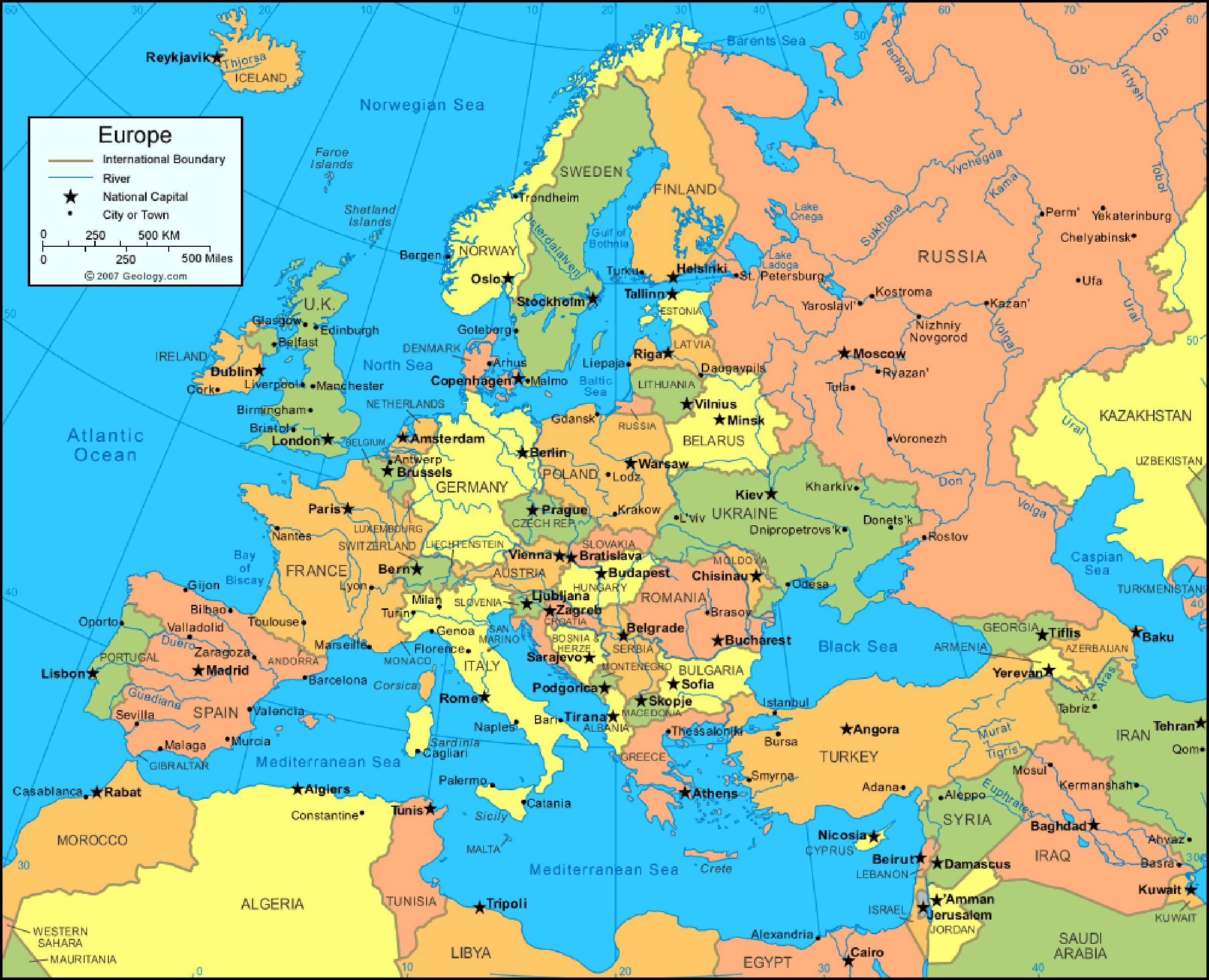
The EU's enlargement policy is aimed at countries that are currently preparing for accession to the European Union, as well as potential candidate countries. EU membership is intended to serve as an incentive for economic and democratic reforms. Since Croatia's accession to the EU in 2013 and the withdrawal of the United Kingdom from the EU in Feb. 2020, the European Union has had 27 MS.
It is in the interest of European citizens to have neighbouring countries with stable democracies and well-developed market economies. Enlargement is a carefully managed process that supports reform efforts in the respective countries by promoting peace, stability, prosperity and democratisation, contributing to the protection of human rights, and strengthening the rule of law throughout Europe.
Since Croatia's accession on 1 July 2013, the European Union has had 28 Member States.
There have been seven rounds of enlargement to date:
1973: Denmark, Ireland and the United Kingdom
1981: Greece
1986: Portugal and Spain
1995: Austria, Sweden and Finland
2004: Estonia, Latvia, Lithuania, Malta, Poland, Slovenia, Slovakia, the Czech Republic, Hungary and Cyprus
2007: Bulgaria and Romania
2013: Croatia
The United Kingdom withdrew from the European Union on 1 February 2020.
Requirements for Accession
In order to join the European Union, countries wishing to accede must fulfil certain criteria, which were established by the EU Heads of State or Government in 1993 at the European Council in Copenhagen:
Political criterion: "Institutional stability as a guarantee for democratic and constitutional order, for the preservation of human rights, as well as the respect for and protection of minorities"
Economic criterion: "A functioning market economy and the ability to withstand competitive pressure and market forces within the EU"
Acquis criterion: The ability to assume all obligations of membership – i.e. the entire body of EU law and policies (the so-called "acquis communautaire") – as well as agreement with the objectives of political union and economic and monetary union
Accession negotiations are not about changing EU rules, but rather about how and when the candidate country adopts, implements and applies the EU rules. The pace of negotiations depends on the progress made by each individual country. It is therefore in the interest of the candidate country to carry out the necessary reforms quickly and efficiently.
For the (potential) accession candidates of the Western Balkans, the EU has established the Stabilisation and Association Process prior to the actual accession process. Within this framework, the countries must successfully complete a multi-stage process of approximation before the actual opening of accession negotiations. An important stage in this process is the conclusion of a Stabilisation and Association Agreement (SAA), which, in addition to economic association, provides for the adoption of parts of the acquis as well as cooperation in a wide range of policy areas.
The European Commission examines the progress of candidate countries and potential candidate countries on an annual basis and publishes progress reports on this.
Candidate Countries and Potential Candidate Countries
There are currently five candidate countries:
- North Macedonia: application in 2004; candidate country status since 2005; Council conclusions on the opening of accession negotiations adopted
- Montenegro: application in 2008; candidate country status since 2010; negotiations opened since June 2012
- Turkey: application in 1987; candidate country status since 1999; negotiations since 2005
- Serbia: application in 2009; candidate country status since 2012; negotiations since January 2014
- Albania: application in 2009; candidate country status since June 2014; Council conclusions on the opening of accession negotiations adopted
With Iceland, accession negotiations had been suspended since May 2013. In March 2015, the Icelandic government withdrew its application for membership.
The European Council has offered all Western Balkan countries the prospect of membership in the European Union. Bosnia and Herzegovina and Kosovo are therefore to be considered potential candidate countries.